
One inspection for masonry and leadwork
Condition-led repair
We choose repair, rebuilding or removal according to the stack and its use.
Junctions included
We check leadwork where the chimney and surrounding roof meet.
Water paths reduced
Repointing and flaunching close common gaps around masonry and pots.
Repair masonry before weather gets further in
Cracked mortar, worn flaunching and damaged brickwork let water into a chimney stack and can contribute to damp inside the building. We inspect the masonry, joints, pots, flaunching and roof junctions before setting out the required work. Depending on structural condition and future use, we can repair the stack, rebuild part or all of it, or remove it where that is the agreed course. Repointing, cleaning and brickwork restoration help retain sound sections.

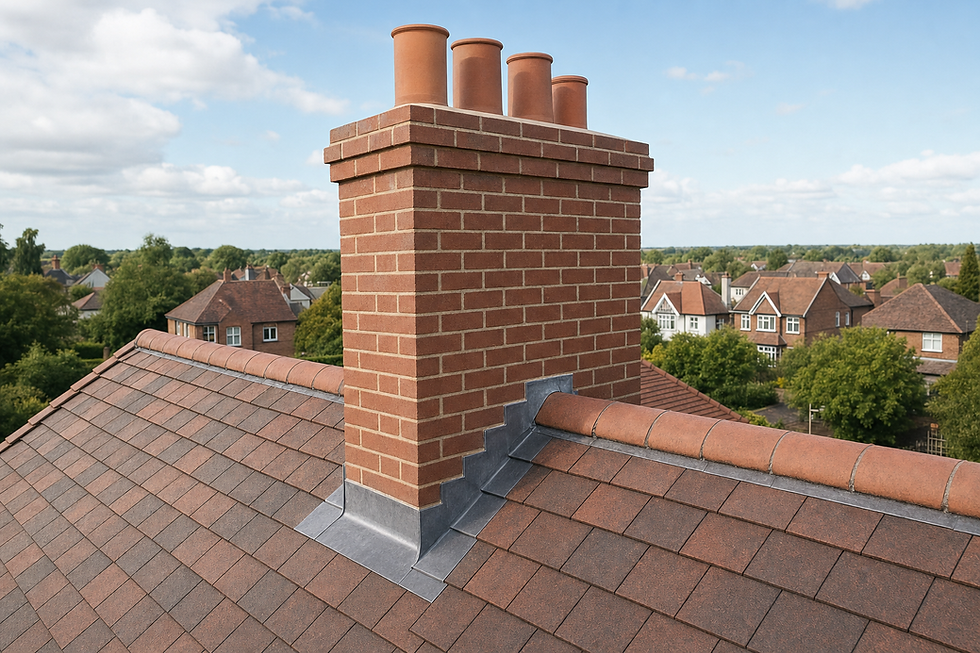
Weatherproof the joints around the stack
Even solid masonry can leak where the chimney meets the roof. We inspect and repair chimney lead flashing, wall flashings, soaker valleys and related dormer leadwork. Worn, split or poorly fitted lead is addressed as part of the weatherproofing specification rather than treating the brickwork alone. Your detailed quotation records the observed defects and planned repairs, helping you understand why each part of the stack or junction needs attention.
Frequently asked questions
Does a cracked chimney need rebuilding?
Not automatically. Local repointing or brick replacement may be enough where the stack remains stable. More extensive deterioration can require partial or complete rebuilding after inspection.
Can failed chimney flashing cause indoor damp?
Yes. Damaged leadwork can let rain enter at the junction between the stack and roof. We inspect the flashing, masonry and nearby details to locate the likely route.
Can an unused chimney stack be removed?
We can assess and carry out agreed chimney removal. The scope depends on the stack, roof and building arrangement, so we inspect the property before preparing a specification.